About the Journal
 Editorial
- 13 Jul, 2026
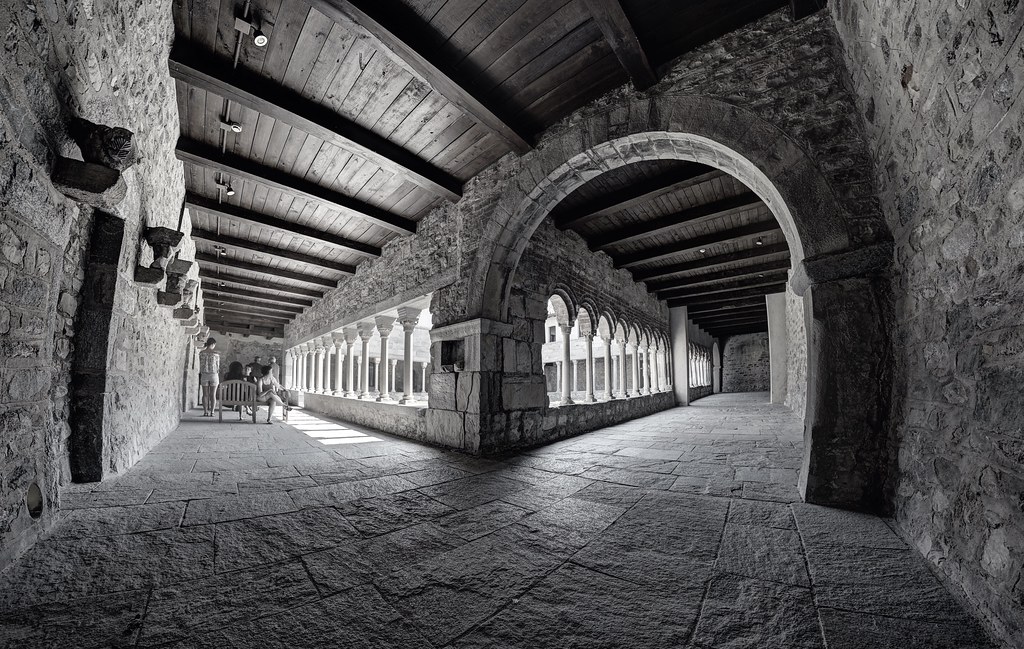
Sacred architecture is the most enduring and eloquent material record of humanity’s engagement with the transcendent. From the polymerising ochre floors of a painted cave sanctuary to the seismic base-isolation of a twenty-first-century cathedral, these structures hold, in their stone, timber, stucco, and landscape, the intentions of builders, the cadences of ritual, and the accretions of centuries of devotion. Fanefane Journal was launched to provide a dedicated, rigorous, and fully interdisciplinary space where this global heritage can be studied at every scale—from the micro-morphology of a temple’s plaster to the cosmological geography of a pilgrimage network.
We believe that the architecture of worship cannot be understood through a single disciplinary lens. A minaret is simultaneously an acoustic device, a structural triumph, a theological statement, and a contested monument; a syncretic wayside shrine on an Andean pass demands the tools of archaeology, art history, ethnohistory, and materials science. Our journal, published quarterly and rigorously peer-reviewed, exists to foster exactly this convergence. We publish research that treats sacred sites not as inert monuments but as dynamic entities, continuously reshaped by liturgy, memory, natural decay, restoration politics, and the changing needs of communities of belief.
Our History and Remit
Fanefane Journal was founded in response to a marked fragmentation in the study of sacred built environments. Scholars working on the radiocarbon chronology of a rock-cut chaitya hall, the stereotomic geometry of a Baroque dome, the ethnographic documentation of a vernacular vodun shrine, or the conservation of a fire-damaged timber stave church tended to publish in separate, often mutually unintelligible, disciplinary journals. We conceived our quarterly as a corrective—a single venue where excavation reports sit alongside iconographic analyses, where a paper on archaeoacoustics in a hypogeum is given the same editorial attention as a heritage management plan for a contested World Heritage site. Our remit spans the globe and all periods, from the Pre-Pottery Neolithic ritual centres of the Levant to the adaptive reuse of deconsecrated churches as multipurpose community halls in contemporary Europe.
From its inception, the journal has been committed to publishing research that is both technically impeccable and conceptually adventurous. We do not prescribe any single theoretical orthodoxy; we have published phenomenologically informed walk-throughs of Egyptian temple processional routes, quantitative spatial syntax analyses of mosque prayer hall expansions, and semiotic studies of the vegetal ornament in Hindu mandapas. What unites the research in our pages is a shared conviction that the physical fabric of a sacred place is not a passive container for ritual but an active participant in it—that the orientation of a mihrab, the rake of an amphitheatre’s seating, the deliberate roughness of a megalithic orthostat, all encode meaning that can be retrieved through careful, contextual scholarship.
While our primary commitment is to original research, each issue also features a curated review section that engages critically with new books, major exhibitions, digital humanities projects, and heritage interventions in the field of sacred architecture. We see this as an essential service, helping our readers navigate a vast and multilingual literature that sprawls across too many specialist silos. Over time, Fanefane Journal has become a record not only of the world’s sacred architecture but of the evolving methods and ethical debates that shape how we study, interpret, and preserve these sites.
Disciplines in Dialogue
The study of sacred architecture is inherently multi-disciplinary, and our editorial outlook reflects this. Archaeology, particularly building archaeology and landscape archaeology, forms the backbone of many contributions. We champion stratigraphic analyses of standing fabric—typologies of masons’ marks in a Cistercian abbey, mortar petrography in a Byzantine fortification church, optically stimulated luminescence dating of brick temples in the Irrawaddy basin—as much as traditional excavation. Architectural history, meanwhile, brings the formal and structural analysis of spatial sequences, proportional systems, dome construction techniques, and the transmission of architectural knowledge across confessional boundaries. A single issue might contain a paper on the diffusion of Armenian church porch types and another on the structural logic of timber cantilevers in a Japanese Buddhist hall.
Art history extends this dialogue into the domain of iconography, visual programmes, and the agency of images within sacred space. We regularly publish studies that decode fresco cycles in monastic refectories, the placement of sculptural narratives on temple façades, the non-figural ornament of mihrab surrounds, and the interplay of calligraphy and light in Ottoman mosques. Anthropology and ethnohistory are equally central, because a building’s meaning resides not only in its fabric but in the living practice that animates it. Papers that document contemporary ritual uses, indigenous ontologies of place, the transmission of building craft through initiation, or the social life of pilgrimage trails are essential to our remit. Finally, heritage conservation, including architectural conservation science, brings an applied dimension: we see no firewall between pure research and the urgent tasks of documenting, stabilising, and interpreting sacred sites threatened by armed conflict, climate change, mass tourism, or neglect.
Increasingly, we encourage submissions that draw on archaeoastronomy and digital methods. The alignment of a megalithic passage tomb with the winter solstice sunrise, the qibla orientation error in a rural mosque and its historical correction, the light-and-shadow hierophanies in a cathedral rose window—these are phenomena that demand quantitative measurement and cultural interpretation in equal measure. We publish photogrammetric surveys of rock-hewn churches, ground-penetrating radar investigations of buried temple phases, and three-dimensional acoustic models of Byzantine chant spaces. This methodological openness is not mere eclecticism; it is a deliberate editorial position that the complexity of sacred architecture demands a correspondingly rich toolkit.
Research We Publish
Fanefane Journal is structured to accommodate the full range of evidence types that scholars of sacred architecture generate. We do not privilege one format over another, provided the work is original, clearly argued, and makes a substantive contribution. The following categories, though not exhaustive, represent the core genres that appear regularly in our pages.
- Excavation and field reports. These include stratigraphic accounts of temple forecourts, burial ad sanctos within church naves, foundation deposits beneath stupa drums, and the architectural phasing of multi-period shrine complexes. We prioritise reports that integrate artefactual and environmental data with rigorous architectural description.
- Building archaeology and standing fabric analysis. Detailed studies of construction techniques, masons’ marks, timber framing, wall painting stratigraphy, and stone degradation patterns. Typical examples include a Lithotype analysis of column shafts in a Romanesque crypt or a bootstrap dendrochronology of a pagoda’s timber core.
- Iconographic and visual studies. Research that interprets the iconographic programme of a sculpted portal, the devotional imagery of an iconostasis, the epigraphic bands of a minaret, or the cosmic diagrams embedded in a mandala ceiling. We also publish comparative iconology across religious traditions.
- Archaeoastronomy and sacred orientation. Studies that measure and interpret alignments: solstitial, lunar, planetary, or stellar; the orientation of early mosques; the interplay of light and shadow in hypostyle halls; the calendrical function of Inca ushnu platforms.
- Conservation and heritage management. Research on the ethics and techniques of preserving sacred architecture, including stone consolidation, seismic retrofitting, climate shelters, the management of pilgrimage wear, post-conflict reconstruction, and community-led conservation initiatives.
- Ritual landscape and sacred geography. Analyses of pilgrimage routes, processional ways, hermitage clusters, sacred groves, and the topographic manipulation of ritual vistas. We encourage submissions that treat the landscape as a constructed sacred phenomenon.
- Theory, method, and historiography. Critical reflections on the category of “sacred space,” on the politics of authenticity, on the decolonisation of architectural history, or on the intellectual biography of key figures in the field.
The diversity of these genres reflects our conviction that sacred architecture is a total social fact, not a discreet building type. A temple is not only a floor plan and a sequence of spaces; it is also a deposit of materials, a setting for performance, a legal entity, a memory palace, and a node in a network of patronage and power. Our authors come to it with trowels, total stations, ethnographies, and theological texts, and our pages are richer for that polyphony.
Editorial Board and Peer Review
The intellectual integrity of Fanefane Journal is upheld by an international editorial board composed of leading researchers in the disciplines we serve. Our board members, who serve staggered terms, are selected to cover the full geographic and temporal range of the journal’s remit: specialists in Pharaonic temple architecture, in the timber churches of Eastern Europe, in the mosque architecture of the Sahel, in the seismic analysis of Inca mortarless masonry, in the anthropology of Hindu pilgrimage, and in the digital documentation of threatened heritage in conflict zones. Together, they guide the journal’s strategic direction, help identify emerging fields of inquiry, and uphold our standards of scholarly rigour and ethical practice.
Every manuscript submitted to Fanefane Journal undergoes a double-blind peer-review process. Upon receipt, the editorial team first assesses the submission for scope, originality, and adherence to our submission guidelines. Manuscripts that pass this initial screen are assigned to at least two external reviewers, chosen for their specific expertise and for their freedom from any conflict of interest with the authors. Our reviewers are drawn from a global pool and include not only academics but, where appropriate, conservation practitioners, curators, and heritage professionals who can assess the on-the-ground implications of a study. Reviews are detailed, constructive, and returned typically within six to eight weeks. Based on the reviewers’ recommendations, the editors then make a decision of accept, revise and resubmit, or reject. We are committed to a transparent and developmental review process: even a rejection is accompanied by a synthesis of the reviewers’ comments to help authors improve their work for submission elsewhere.
We take seriously our responsibility to maintain the highest ethical standards. We follow the Core Practices of the Committee on Publication Ethics, and we require authors to disclose any potential competing interests. For research involving ethnographic fieldwork, excavation, or the documentation of living religious practice, we expect evidence of appropriate community engagement, informed consent, and, where relevant, permits from heritage authorities. We are particularly alert to the sensitivities of publishing the locations and detailed descriptions of vulnerable archaeological sites, and our editors work with authors and heritage custodians to balance scholarly transparency with site protection. The double-blind process, in which neither author nor reviewer knows the other’s identity, is rigorously maintained to guarantee impartiality and to encourage frank, fearless evaluation.
Open Access Policy
Sacred architecture belongs, in a profound sense, to everyone. The great monuments of the world’s religions are placed under pressure not only by environmental threats but by the competing claims of local communities, national governments, international tourism, and diasporic memory. It is in keeping with this public stake that Fanefane Journal operates a diamond open-access model: all content is immediately and freely available upon publication, with no article processing charges levied on authors, and no subscription fees for readers. We believe that research, particularly research conducted in or about places that may be economically disadvantaged or politically inaccessible, should never be locked behind a paywall.
Our articles are published under the Creative Commons Attribution license (CC BY 4.0), which permits unrestricted re-use and re-distribution, provided proper attribution is given to the original authors and source. This license was chosen deliberately to maximise the visibility and impact of the research we publish, and to allow practitioners—from stone conservators in Guatemala to imams overseeing mosque restorations in Indonesia—to download, translate, and apply findings without bureaucratic obstruction. The journal is hosted on a dedicated digital platform that ensures long-term preservation through membership in the CLOCKSS and Portico archiving networks, and metadata are harvested by all major indexing services. Our commitment to open access is absolute; it is not a promotional strategy but an ethical imperative rooted in the very nature of our subject matter.
Our Readership
Fanefane Journal is designed for a readership as diverse as the sacred architecture it studies. Our primary audience is, of course, the international academic community: archaeologists, architectural historians, art historians, anthropologists, heritage scientists, and religious studies scholars who are working at the leading edge of research. But we are equally committed to serving the professionals who steward sacred sites on a daily basis. Site managers, conservation architects, structural engineers specialising in historic masonry, heritage bureaucrats, and museum curators will find in our pages not only cutting-edge scholarship but practical case studies, condition assessment protocols, and critical evaluations of conservation interventions that can be directly transferred to their own work.
We also take seriously our responsibility to students and to the interested public. By making all content free to read, we lower the barrier for graduate students writing dissertations, for advanced undergraduates seeking current literature, and for community historians researching their local church, temple, or mosque. We have been gratified to receive correspondence from monastic communities using our articles to understand the architectural history of their own foundations, and from indigenous custodians using archaeoastronomical studies to reinforce traditional calendrical practices. In this sense, our readership is not a passive recipient but an active participant in the ongoing interpretation and stewardship of the sacred built environment. We welcome letters, commentaries, and dialogue that extend the life of our published research beyond the page.